


Melamine Vs. Laminate Kitchen Cabinets: Which Is Right For Your Home
Mar 27, 2026
Leave a message
If you are selecting kitchen cabinets for your home, you have likely encountered two terms frequently: melamine and laminate. You may also wonder whether these two materials are essentially the same, given that their textures and colors appear similar, and even the substrates can be identical. Yet, the price difference can be significant.
Choosing between standard melamine(TFL) panels and laminate (HPL) is a critical decision that will impact your cabinetry's durability, style, and overall value. Use this guide to make an informed choice for your home.
What Are the Differences Between Them?
Melamine is a thin decorative paper layer fused directly onto a substrate (typically particleboard or MDF) in a single manufacturing step.
Melamine kitchen cabinets doors are created by bonding a single layer of resin-saturated decorative paper directly to the substrate. Heat and pressure activate the resin in the saturated melamine sheet, forming a cross-linked bond with the substrate. This effectively seals the substrate surface.
Laminate (High-Pressure Laminate or HPL) kitchen cabinet doors consist of multiple layers: kraft paper saturated with resin, a decorative paper layer, and a transparent melamine overlay on top. The term "high-pressure" refers to the manufacturing process, where these layers are subjected to both high pressure and high temperature to form a strong, unified panel.

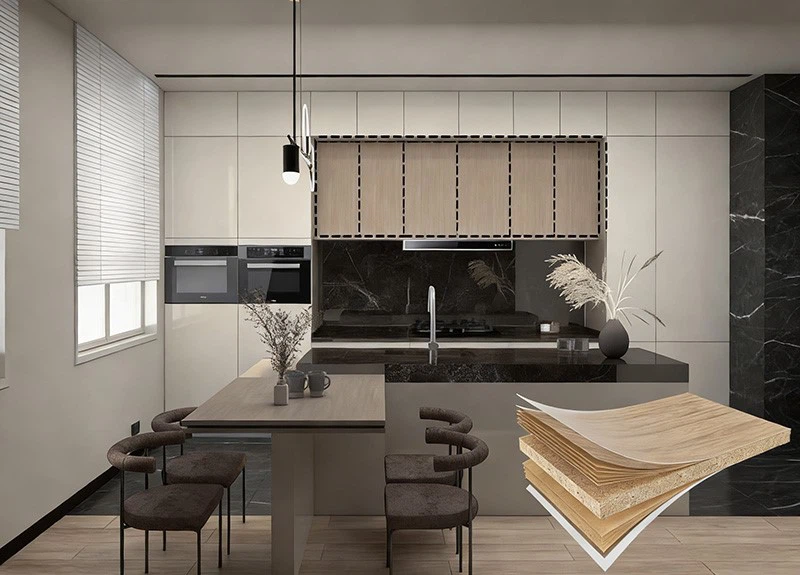
Comparison of Melamine and Laminate
Assuming the same substrate, here is how melamine and laminate cabinetry perform across key factors:
| Factor | Renovated Atdartment | Luxury Family Home |
| Surface Thickness | Thin (0.2–0.4 mm) | Thick (0.6–1.2 mm+) |
| Durability | Good resistance to scratching, heat, and staining | Excellent impact, scratch, and heat resistance |
| Moisture Resistance | Edges must be perfectly sealed | Highly durable, especially at seams |
| Cost | Affordable | Mid to high |
| Lifespan in Busy Kitchens | 3–7 years with care | 10–15+ years |
The Choice of Substrate
Selecting the right surface material is only half the equation.
Choosing between particleboard, medium-density fiberboard (MDF), and plywood involves balancing upfront cost against long-term performance. For budget-conscious projects, particleboard allows homeowners to enjoy the stylish finishes of melamine or laminate at the most accessible price point.
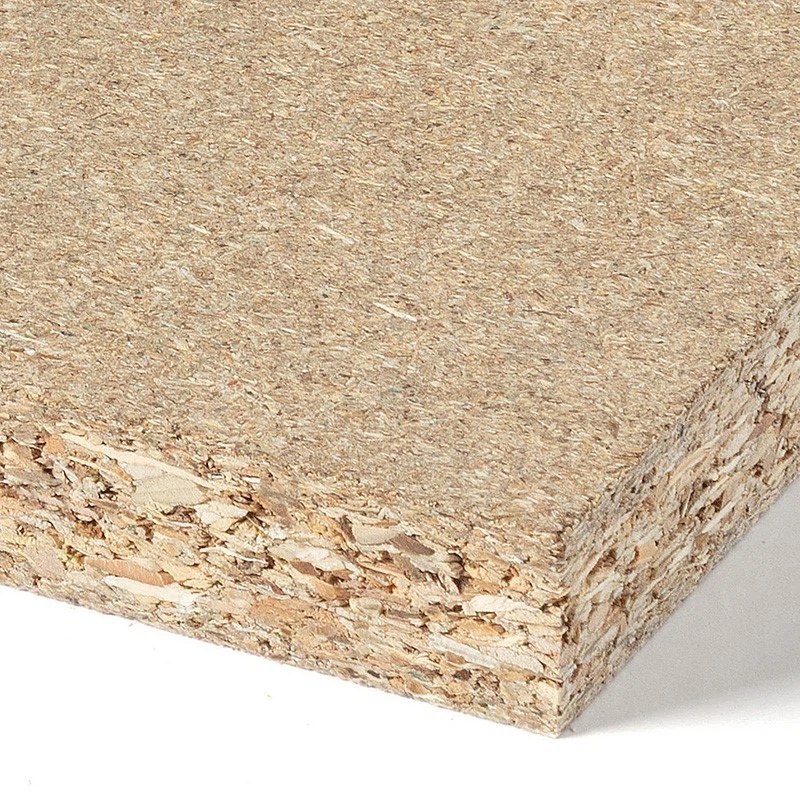
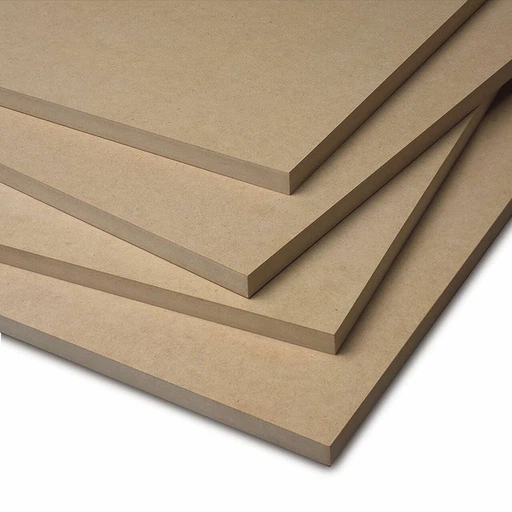
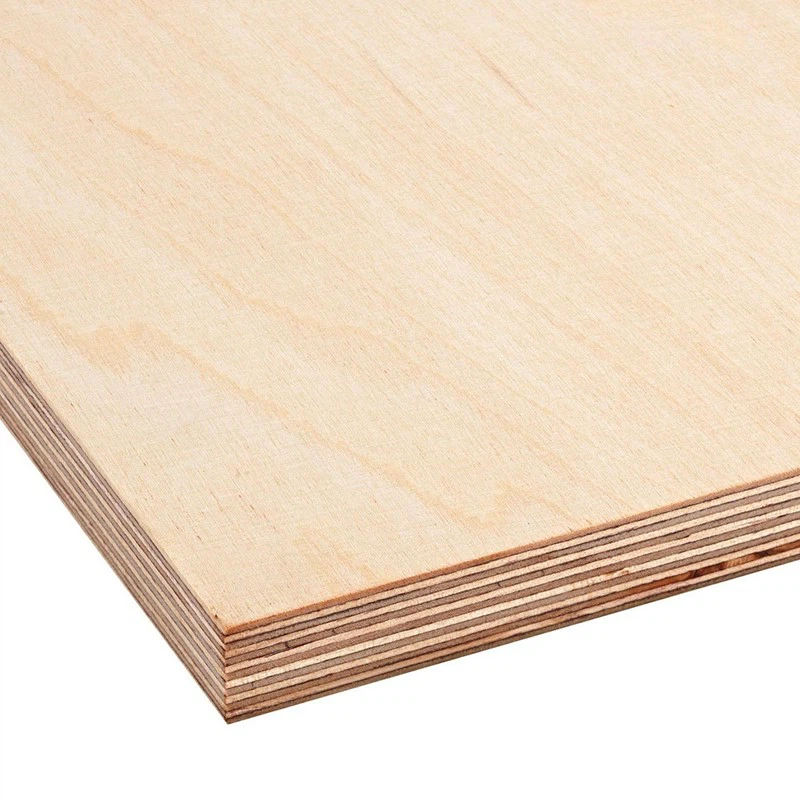
However, it is essential to ensure that particleboard does not come into contact with standing water. MDF offers a solid mid-tier option, providing better moisture resistance and stronger screw-holding capability.
For areas with high humidity or greater risk of moisture exposure, upgrading to a plywood substrate is a smart investment. While the initial cost is higher, the cross-layered construction of plywood delivers superior structural stability and effectively prevents long-term swelling or delamination. This upgrade extends the service life of your melamine or laminate cabinetry, protects your investment, and helps ensure your new kitchen maintains its beauty over time.
Edge Sealing Matters Just as Much
Currently, PUR (polyurethane) edge banding delivers outstanding performance. PUR edge banding creates a permanently waterproof bond that protects the substrate from moisture-the single biggest threat to cabinetry. If edges are poorly sealed, even laminate cabinets can fail quickly.
How to Clean and Maintain Your Cabinets
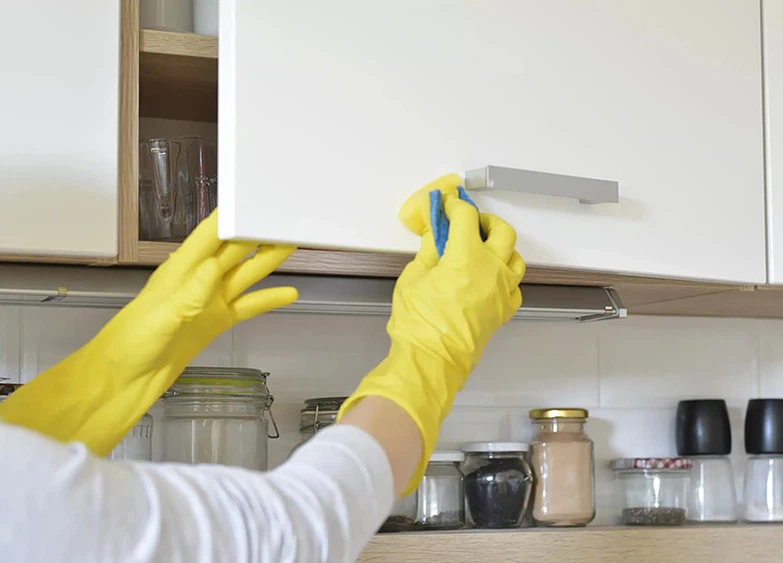
Both melamine and laminate cabinets are known for their low-maintenance surfaces-a significant improvement over older materials. Daily cleaning is simple: use a soft, damp cloth with a mild, non-abrasive cleaner (such as diluted dish soap). This ease of care is a major advantage for busy households seeking a stylish yet practical solution that requires minimal upkeep.
Neither melamine nor laminate absorbs liquids, meaning spills such as juice, coffee, or wine can be wiped away easily without leaving stains when addressed promptly. For tougher residue like grease, a mixture of vinegar and water works effectively. This straightforward maintenance routine will keep your melamine or laminate cabinets looking like new.
There are slight differences in maintenance needs. Melamine's hard, fused surface offers strong chemical resistance, but it is best to avoid abrasive cleaners or scouring pads, as prolonged use may dull the finish. While high-pressure laminate is extremely tough, the bonded edges can become vulnerable if exposed to standing water over extended periods.
Melamine Is Not "Bad" – And Laminate Is Not Always "Better"
The right choice depends on:
- How the kitchen will be used – Daily family cooking or occasional entertaining?
- The budget – Lowest upfront cost, or best long-term value?
- Environmental conditions – Consider climate and specific use scenarios.
- Design expectations – Is textured depth needed, or a clean, uniform appearance preferred?