


From Dinnerware To Wine: How To Organize Your Dining Room Cabinet Like A Pro
Mar 11, 2026
Leave a message
If cabinetry is the "professional backbone" of the kitchen-responsible for the heavy lifting of cooking-then the sideboard is the "lifestyle manager" of the dining area, enhancing everyday convenience and ambiance. After finalizing your kitchen cabinet design, it's equally important to consider how to professionally design your dinging room cabinet. Below is a planning guide from a professional perspective.
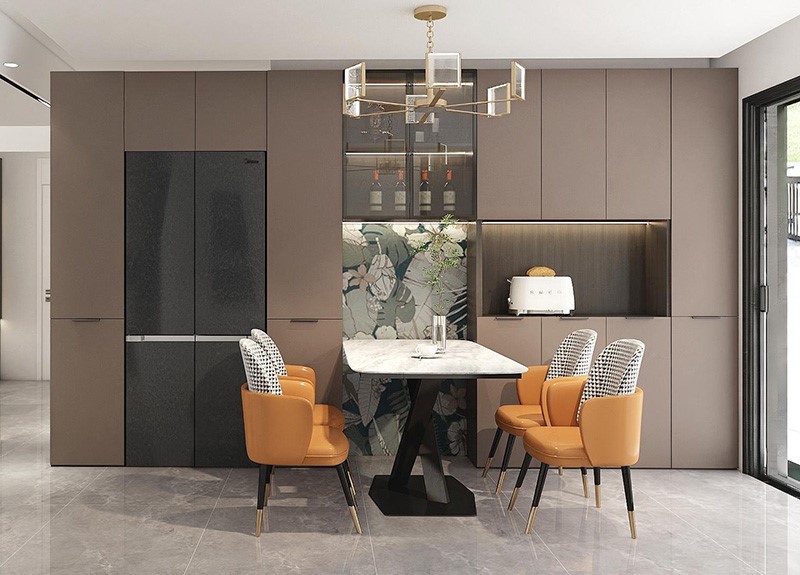
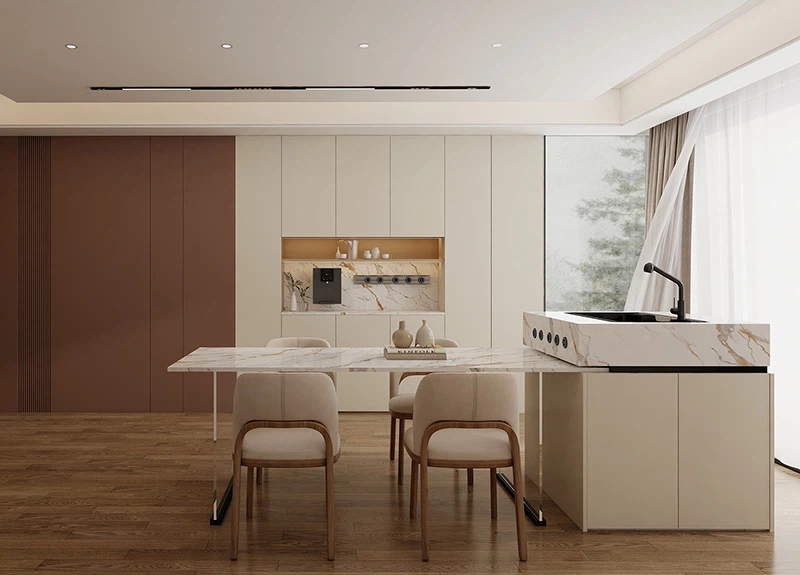

The Importance of Dining Room Cabinet
The significance of dining room cabinet is reflected in the following aspects:
- Storage and Workspace: First, it relieves storage pressure from the kitchen. Infrequently used tableware, snacks, beverages, and backup condiments can all be stored here. Meanwhile, its countertop serves as a perfect "temporary staging area" for dishes about to be served or as a station for brewing tea and coffee.
- Extending Spatial Ambiance: In modern home design, the lines between dining room and kitchen are blurring, especially in open-plan kitchens and western kitchen concepts. The dining room cabinet acts as a natural visual transition between the living room and kitchen. It reinforces the functionality of the dining area, enriching the spatial layering. A stylish dining room cabinets, paired with a piece of art, a lamp, or a few collectibles, elevates the taste of the entire zone.
- Spatial Function: For small apartments, it can function as a "wall system" with powerful storage capacity. In larger, open-plan spaces, it can even serve as a room divider. Through customization, a sideboard can also cleverly conceal unsightly columns or beams, or even integrate a refrigerator or oven, making the space appear neater and more sophisticated.
Defining Your Needs
Before designing, determine the primary function you want your dining room cabinets to achieve: pure storage, or a combination of storage and display.
✅Focus on Storage: If your living space is compact and storage is the core need, opt for plenty of closed cabinets. These can stockpile snacks, napkins, backup cutlery, and infrequently used small appliances.
✅Focus on Display: If you need to showcase a collection of fine wines, elegant tableware, or tea sets, incorporate elements like glass doors, open shelving, wine racks, and appropriate lighting into the design to highlight your collection and elevate the room's style.
✅Focus on Workspace: If you have hobbies like baking, brewing coffee, or mixing drinks, ensure you leave adequate power outlets and, if needed, plumbing for a sink on the countertop.
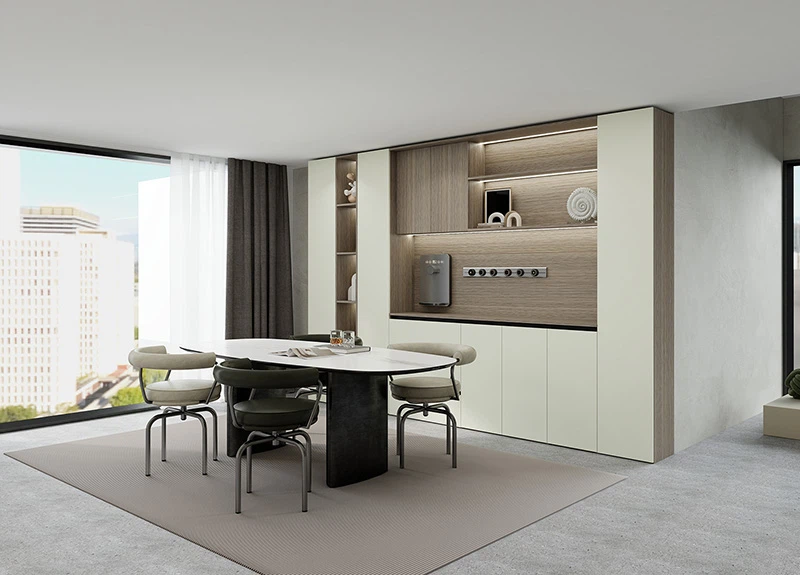

Zoning and Planning
The most fundamental dinging room layout follows a three-section configuration, which can be adjusted based on your needs:
Wall Cabinets (Recommended Depth: 30cm-35cm)
Primarily for storing low-frequency items and display purposes. Examples include backup kitchen supplies, infrequently used dry goods, or wine collections. It's advisable to use cabinet doors to maintain a tidy look. Consider leaving two doors as glass-fronted to add a sense of openness, with internal lighting to showcase glassware or decorative cups.
Countertop/Operational Area (Height to Ceiling Optional)
Typically positioned at waist level, around 85cm-95cm from the floor. The exact height can be customized based on the height of the primary user(s). This is the most frequently used zone of the cabinets, designed to hold small appliances like kettles, coffee machines, and toasters. Strongly recommended: Install a backsplash between the countertop and the wall, just like in a kitchen, to prevent the wall from becoming moldy, yellowed, or dirty from daily use.
Base Cabinets (Typical Height: 85cm-90cm)
Base cabinets are usually for storing heavier items and high-frequency use items, such as rice, cooking oil, cutlery, and snacks. Drawers are far more practical than cupboards here. It's advisable to include several deep drawers, making it easy to access plates stored at the back. If you opt for hinged doors, ensure the interior is fitted with adjustable shelves or pull-out baskets.
Common Mistakes to Avoid
Here are some frequent pitfalls to avoid during planning:
❌Not Enough Outlets: This is the most common pain point. Having an unsightly power strip visible is a design flaw. When in doubt, add more. Track outlets are an excellent choice that combines aesthetics and functionality.
❌Incorrect Depth Calculation: Your new coffee machine might not fit in the designated open area, or its plug might hit the wall when pushed all the way back. Measure the dimensions of your frequently appliances beforehand and account for the depth needed for plugs and sockets (typically, reserve an extra 5cm).
❌All Open Shelving: While open shelves can look attractive, they are very labor-intensive to clean and can easily appear cluttered if not styled perfectly. Follow the "80/20 Rule": 20% visible (for display, frequently used items), 80% concealed (for bulk storage).
❌Ignoring Ventilation: If you plan to integrate appliances like a refrigerator or microwave into the cabinetry, you must reserve ventilation gaps or install ventilation grilles to prevent overheating.
With these guidelines in mind, you likely have a clearer vision for your upcoming sideboard project. Contact us to move forward with production.