


The Most Overlooked Feature in Walk-in Closet Design
May 12, 2026
Leave a message
When people dream of a walk-in closet, the images that come to mind are often similar: neatly arranged shoes, perfectly hung clothing, perhaps an island with a jewelry drawer. And when they actually plan their closet, the details they focus on tend to be the same: wood finishes, glass doors, storage baskets, and so on.
However, many people overlook a critical element-one that determines whether their closet becomes a daily pleasure or a lingering frustration.
What is that element?
Lighting layout. More precisely, lighting where you actually need it.
Not just ceiling lights. Not just beautiful chandeliers for showroom photos. But light that actually illuminates the clothes you want to see, the drawer you're searching through, and the shoes in the corner.
Here's why this overlooked element matters more than any other.
The Myth: Beautiful Lights, Terrible Visibility
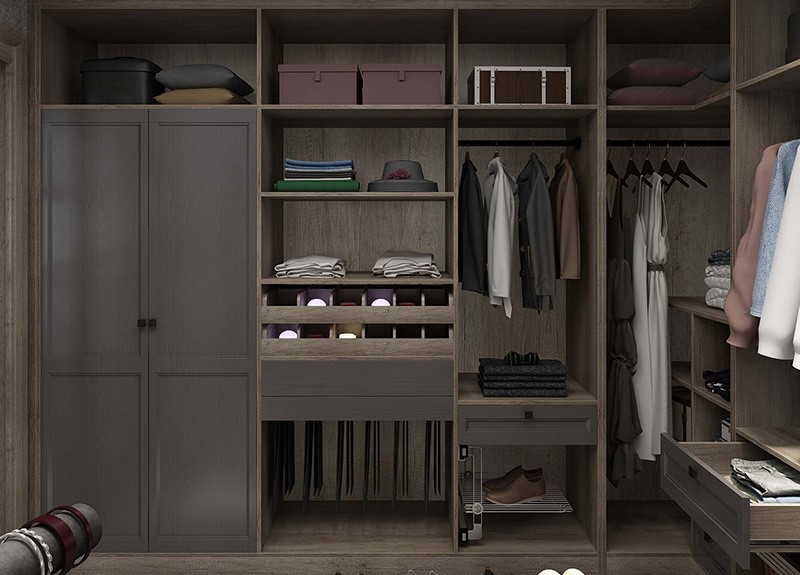
Most walk-in closets have only one light source: a central ceiling light. Sometimes a pendant, sometimes a recessed light, sometimes even a small chandelier for elegance.
The problem is this: when you stand in front of hanging clothes, your body blocks the light. Everything falls into shadow. Dark colors become hard to distinguish. Black looks like navy, navy looks like black. And the corners of deep shelves become dark caves.
Here's a simple test you can do right now: stand in front of any closet in your home. Notice how your body casts a shadow over the very clothes you're trying to see. This shadow doesn't exist on a designer's computer screen, but it is very real in everyday life.
How to Plan the Lighting Layout – It Matters
Lighting for a walk-in closet follows a simple principle: illuminate vertical surfaces, not just the floor.
| Lighting Type | Placement | Purpose |
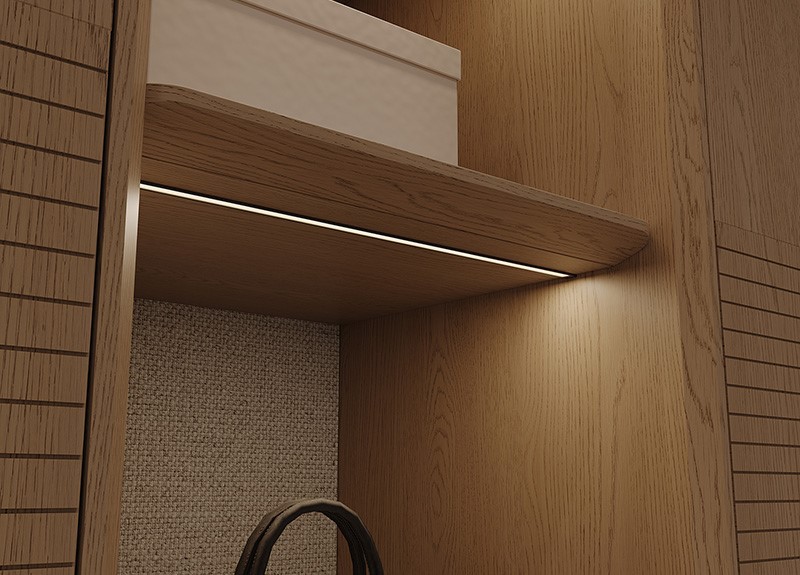
| Linear LED strips | Along hanging rods, inside the rod itself, or mounted on the front edge of shelves | Direct light onto hanging clothes from above and in front |
| Vertical lighting | On wall panels or inside glass-front tower cabinets | Illuminates clothes at eye level, not blocked by body |
| Under-shelf lighting | Beneath each shelf, pointing down | Lights the shelf below, eliminating shadows in drawers and cubbies |
| Motion-activated toe-kick lighting | At floor level along the base | Nighttime navigation without turning on main lights |
| Inside drawers | LED strips triggered when drawer opens | See contents instantly, no rummaging |
The result: Every garment, every accessory, every corner is visible - no matter where you stand.
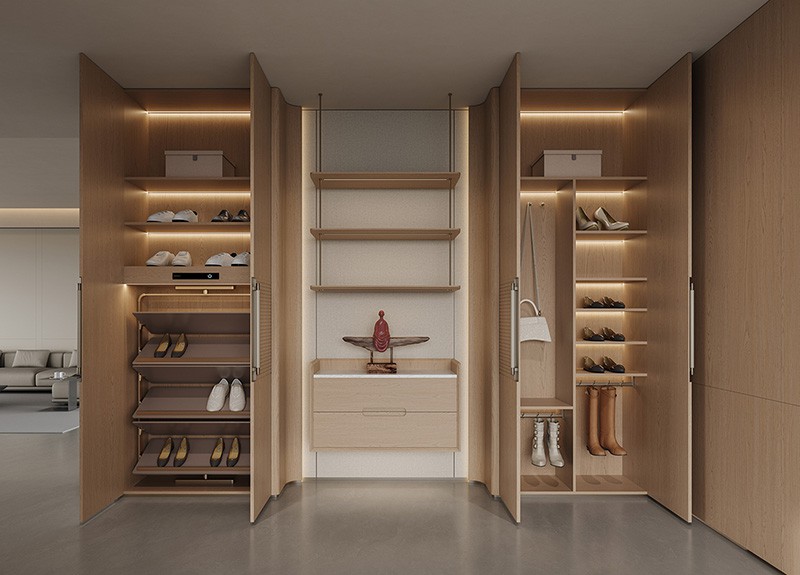

If Lighting Is So Important, Why Is It Often Forgotten?
First, most walk-in closet designs start as 2D drawings. On paper, a single central light looks sufficient. The shadow problem only becomes apparent in three dimensions, when a real person stands inside the space.
Second, good lighting adds cost. Linear LED strips, drivers, wiring, and motion sensors all increase the budget. Many clients cut lighting first, thinking, "I can add it later." But retrofitting lighting is expensive and disruptive.
Third, lighting requires early coordination. Electrical rough-ins must be completed before drywall is installed. Once walls are closed, adding vertical or under-shelf lighting becomes a major renovation.
The result: Lighting gets deprioritized, delayed, or eliminated entirely. And the homeowner pays for that decision for years to come.
A walk-in closet is an investment in organization, storage, and daily convenience. But without proper lighting, that investment is severely compromised.
You can have beautiful wood finishes, soft-close drawers, and custom shoe racks. But if you can't see what's in front of you, none of it matters.
So before finalizing your closet design, ask yourself one question: Where will the light actually fall?