


Choosing The Right Materials For Your Custom Closet: A Guide To Durability And Style
Oct 31, 2025
Leave a message
Your walk-in closet is more than just a storage space; it's a personal sanctuary, a daily launchpad for your day, and a reflection of your personal style. While the layout and hardware are crucial, the materials you choose form the very foundation of its beauty, durability, and long-term value. REBON as expert custom cabinet makers, we believe that an informed choice is the best choice. This guide will walk you through the key material considerations for your custom closet, balancing practicality with aesthetics.
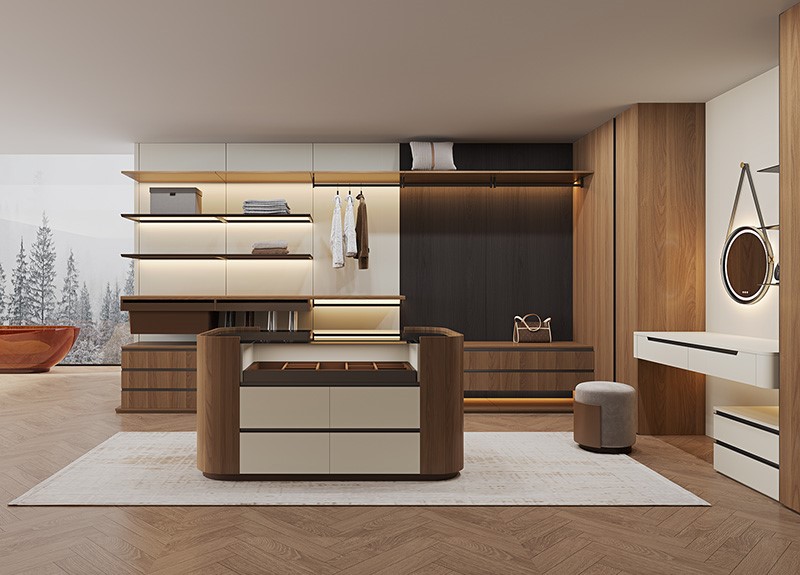
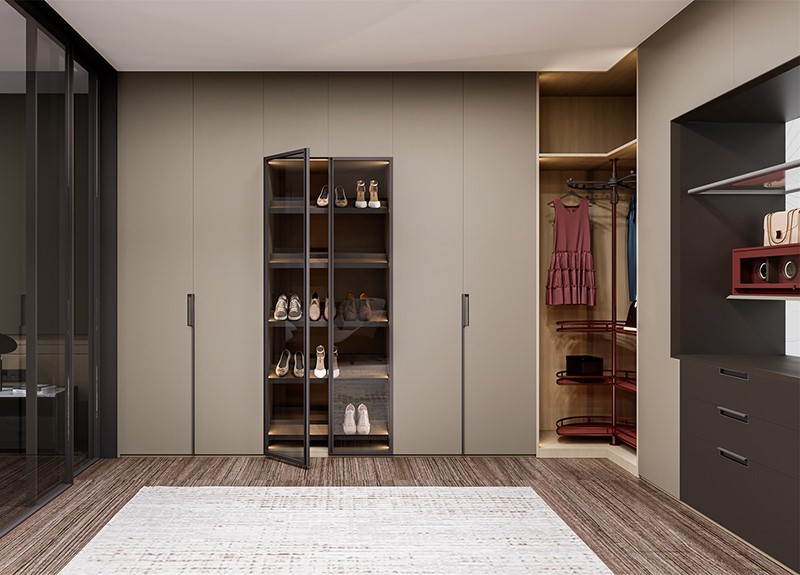

The Foundation: Engineered Woods vs. Solid Wood
Closet base materials typically consist of two main categories of wood products.
Engineered Woods: The Modern, Stable Choice
- Medium-Density Fiberboard (MDF): MDF is composed of fine wood fibers bonded with resin under high pressure and heat. It results in an incredibly smooth, uniform surface that is ideal for painted finishes.
Pros: Perfectly smooth (no wood grain), cost-effective, very stable (resists warping), eco-friendly (uses wood waste).
Cons: Heavier, can be prone to moisture damage if not properly sealed, not as strong as plywood for very long shelves.
Best For: Painted finishes, detailed shaker-style doors, and interior panels where a flawless painted look is desired.
- Plywood: Made by gluing thin layers of wood veneer together, plywood is known for its exceptional strength and durability.
Pros: Very strong and durable, resistant to cracking and warping, holds screws well, good moisture resistance compared to MDF.
Cons: The edges have a layered appearance that requires banding for a finished look, and the surface veneer can have imperfections.
Best For: Long shelving that needs to hold significant weight, closet systems requiring maximum structural integrity, and as a superior core material.
- Chipboard (Particle Board): Chipboard is made from larger wood chips, flakes, and sawdust mixed with resin and pressed into sheets. It is the most economical option among engineered woods.
Pros: Highly cost-effective, lightweight
Cons: It is the least dense and durable option, prone to swelling and damage when exposed to moisture, and does not hold screws as well as MDF or plywood.
Best For: Budget-conscious projects, non-load-bearing elements. It is almost always used with a laminate or veneer surface.
Solid Wood: The Classic, Authentic Beauty
- Description: Traditional and timeless, solid wood offers grain patterns and a natural warmth that is difficult to replicate.
Pros: Authentic beauty, can be sanded and refinished over time, very durable.
Cons: The most expensive option, can expand and contract with humidity changes, may be prone to warping if not properly acclimated.
Best For: Heirloom-quality pieces, traditional or rustic styles, and clients who prioritize the unique character of natural wood.


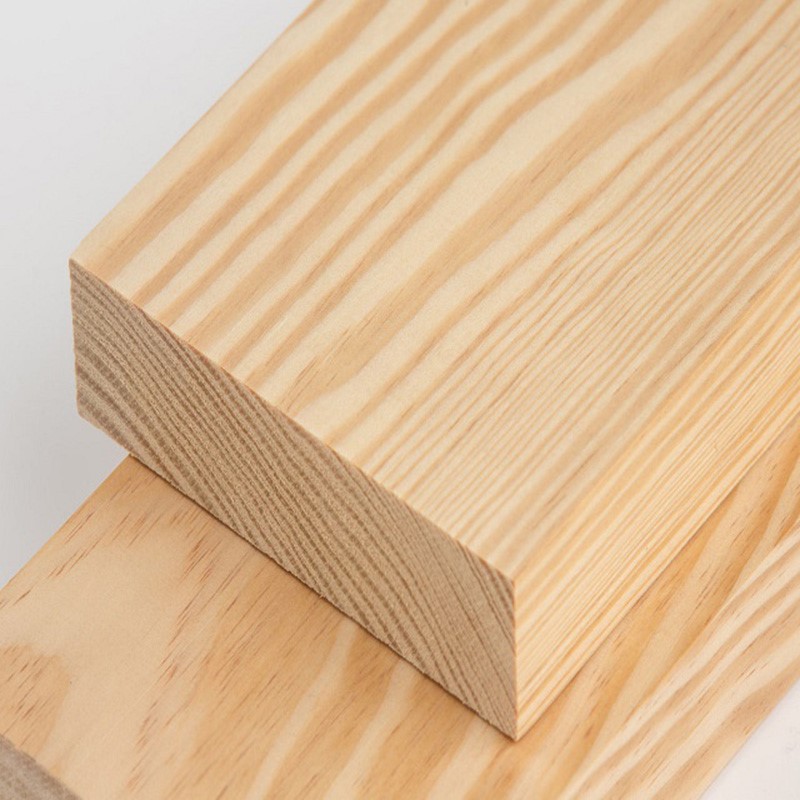
The Finishing Touch: Melamine, Lacquer, and PET
The surface finish you choose defines your closet's aesthetic, tactile feel, and its resilience against daily wear. Here are the three most popular and modern choices.
- Melamine: A durable and budget-friendly paper fused to a substrate (like MDF or chipboard) under high heat and pressure. It's available in a vast array of colors, patterns, and woodgrain prints.
Pros: Highly scratch and stain-resistant, easy to clean with a damp cloth, extremely cost-effective, and low-maintenance.
Cons: The finish can be chipped if struck with a sharp object. The look, while versatile, can lack depth compared to higher-end options.
Ideal For: Modern, practical closets, home offices, children's rooms, and anyone seeking a durable, low-maintenance solution.
- Lacquer: This finish creates a high-gloss, mirror-like surface or matt that is synonymous with luxury and modern design. It is typically achieved through a multi-step process of applying lacquer paint to a perfectly smooth MDF core, followed by polishing.
Pros: Delivers a deep, reflective, and ultra-sleek appearance that is stunning in contemporary spaces. The surface is smooth, easy to wipe clean, and feels premium to the touch.
Cons: Can be prone to showing fingerprints and minor scratches more than textured finishes. It is also one of the more expensive options due to the labor-intensive application process.
Ideal For: Creating a high-end, designer look in master suites and modern homes where a bold aesthetic statement is desired.
- PET (Polyethylene Terephthalate): PET is an eco-friendly and increasingly popular material made of polyester. These thin, colorful films are fused to a substrate, resulting in a vibrant, durable finish.
Pros: Available in a wide spectrum of vibrant colors and soft-touch matte finishes. It is environmentally friendly, highly resistant to yellowing and chipping, and the seams are often virtually invisible for a seamless look.
Cons: While durable, it may not be as resistant to sharp impacts as some laminates. The matte finishes can sometimes show oil marks from fingerprints, though they are easy to clean.
Ideal For: Eco-conscious homeowners, those seeking a modern matte or high-gloss finish without the cost of lacquer, and for creating a cohesive, seamless appearance in colorful or minimalist designs.




Don't Forget the Details: Hardware and Lighting
The materials you see are crucial, but the ones you touch are just as important.
- Drawer Slides & Hinges: Opt for full-extension, soft-close mechanisms. The material here is typically steel with a corrosion-resistant coating. This ensures your drawers glide smoothly, provide full access, and last a lifetime without slamming.
- Handles & Knobs: From sleek metal to elegant ceramic, your choice here is the "jewelry" for your closet. Consider both aesthetic appeal and ergonomic feel.
- Lighting: Integrated LED strip lighting not only makes finding clothes easier but also adds a luxurious, ambient glow. Ensure the materials used for light housings are suitable for the environment.


Making the Right Choice for Your Lifestyle
Consider these questions when selecting your materials:
- What is your climate like? In humid areas, prioritize moisture-resistant substrates like plywood and ensure all edges are properly sealed.
- Who is using the closet? A busy family closet needs the durability of melamine or PET, while a master suite can accommodate the high-gloss luxury of lacquer.
- What is your style? For a crisp, modern look, matte PET or melamine is perfect. For a luxurious statement, choose lacquer.
- What is your budget? Melamine offers the best value, PET provides a great balance of eco-friendliness and modern aesthetics, while lacquer sits at the premium end.
Your custom closet is a long-term investment. Choosing the right materials is not just about how it looks on installation day, but how it will function and look for years to come. By understanding the pros and cons of each option, you can make confident decisions that align with your lifestyle, taste, and budget.