


Flow And Function: Analyzing The Ergonomics Of Kitchen Cabinet Layouts
Sep 04, 2025
Leave a message
In today's fast-paced lifestyle, the kitchen is no longer just a cooking space; it's the heart of the home, a place for socializing, relaxing, and creating delicious meals. With the rise of the "home economy" and "refined living" concepts, an ergonomic kitchen has become more important than ever. Have you ever experienced back pain after a busy day in the kitchen? It's likely not because you're tired, but because your kitchen cabinet layout is working against you. Today, we'll delve into the science of "flow" and "function" in kitchen cabinet layout, revealing how to create an ideal kitchen that's both efficient and comfortable.
More Than Just a "Work Triangle"
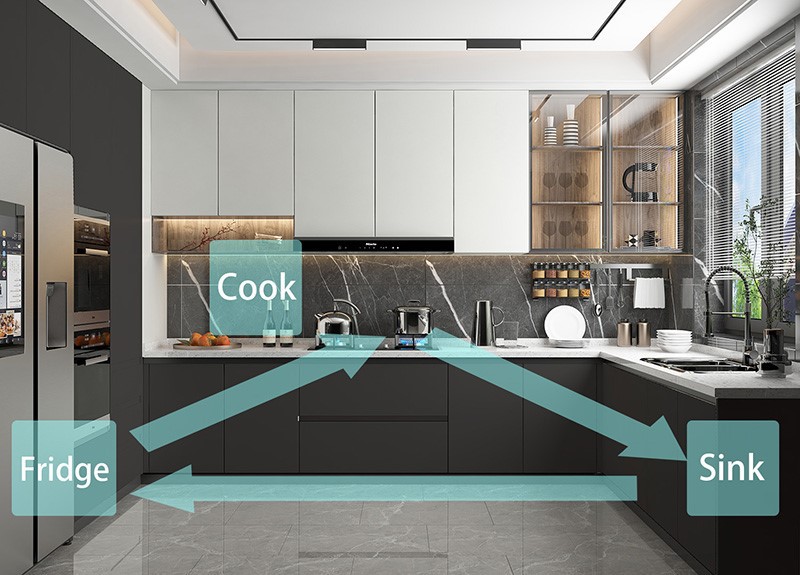
The traditional "work triangle" (the virtual triangle connecting the sink, stove, and refrigerator) remains the cornerstone of a good layout, but modern design has developed a more comprehensive concept of "workspace."
The traditional "work triangle" (the virtual triangle connecting the sink, stove, and refrigerator) remains the cornerstone of a good layout, but modern design has developed a more comprehensive concept of the "workspace."
1. Efficient Flow: The ideal kitchen flow should be seamless, avoiding unnecessary back-and-forth. From gathering ingredients (refrigerator), washing (sink), preparing food (countertop), cooking (stovetop), and plating (prep area), the entire process should be clear and seamless. Cluttered flow is a primary cause of fatigue and inefficiency.
2. Functional Zoning: Store related items where they are used, creating efficient zones:
Cleaning Area: Under the sink and surrounding cabinets, for cleaning supplies and trash cans.
Preparation Area: The largest countertop and the drawers below, for knives, cutting boards, and dishes.
Cooking Area: Under and near the stove, for pots, spices, and cooking oil.
3. Ergonomic Dimensions: This is key to comfort. The height of the countertop and the depth and height of the wall cabinets should be tailored to the height of the main user. Avoiding excessive bending or standing on tiptoe can fundamentally reduce the burden on the body.
How Good Design Solves Problems
Theory needs to be validated by practice. Let's look at several case studies from our design team to illustrate how scientific layout can be applied in practice.
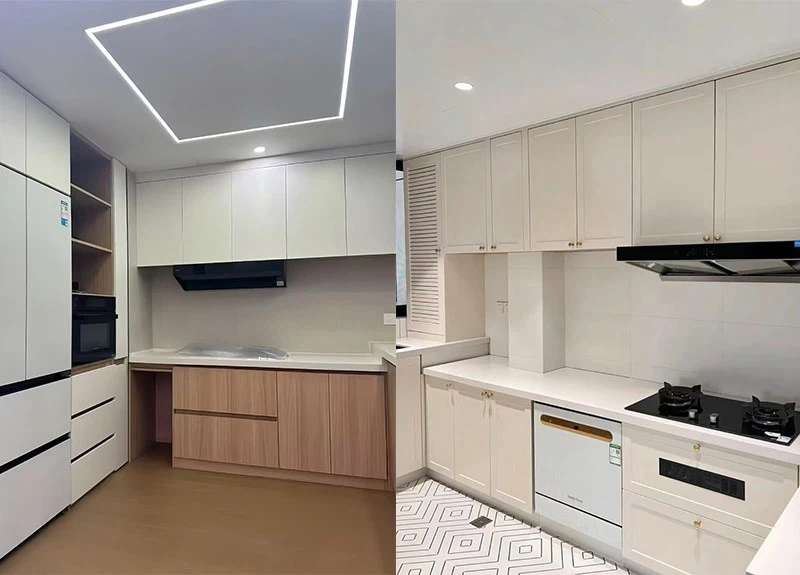
Pain Point: Small kitchens are cramped, making it difficult to turn around and insufficient storage space.
Solution: Adopt an efficient L-shaped or L-shaped layout and maximize vertical space utilization.
Design Highlight: A combination of staggered wall cabinets with built-in appliances like microwaves frees up countertop space. Floor cabinets feature pull-out drawers, replacing traditional partitions, allowing for easy access to items deep within without having to squat or bend.
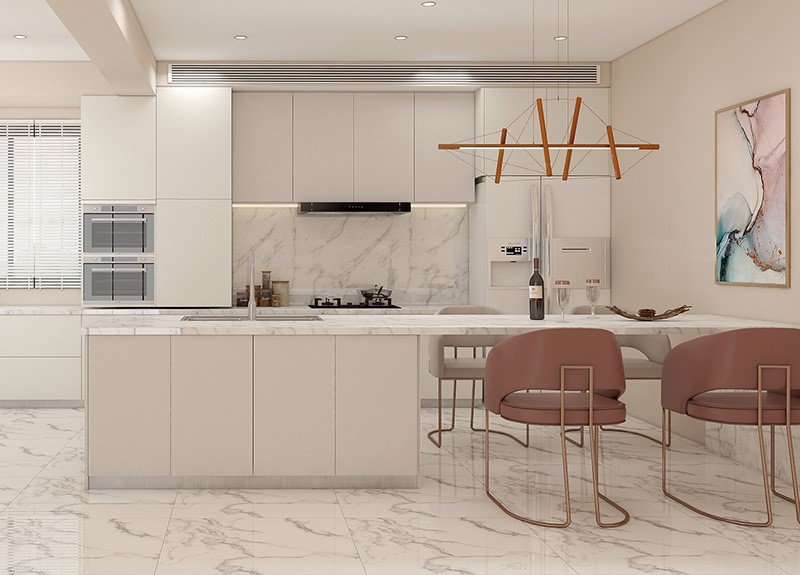
Pain Point: Too much stuff always clutters the countertop, making it less aesthetically pleasing.
Solution: Create a robust storage system and ample preparation area.
Design Highlight: A full 90cm of countertop space is reserved between the stove and sink for prime preparation. A wall-mounted rail system is used to hang frequently used tools. Corner baskets and vertical cabinets are also designed for efficient storage, making full use of every corner.
Trends and the Future
Future kitchen design will prioritize personalization and intelligence. Integrated appliances create a clean, unified look; smart lighting ensures shadow-free countertops; and customization designs perfectly address unique floor plans, bringing new life to any space.
Whether your kitchen is compact or spacious, its core purpose should be to serve people. A well-designed kitchen cabinetry based on ergonomic principles is the greatest investment you can make in your kitchen.