


What Are The Pros And Cons Of Plywood?
Mar 21, 2023
Leave a message
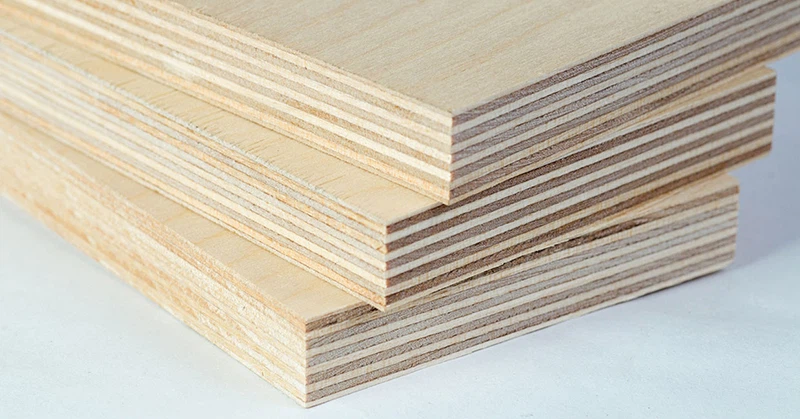
Plywood is a type of manufactured wood that is made by pressing and binding thin sheets or fine layers of wood veneers together into one solid piece.
Many customers do not know the pros and cons of plywood when they choose it as the base material. Here REBON lists the pros and cons of plywood for your reference!
Pros
Advantage 1: The structure is stable and the force is uniform.
The production process of plywood is made by pressing layers of veneers horizontally and vertically. This structure makes the finished plywood more stable and durable in terms of performance.
Advantage 2: Strong nail holding power and reusable.
The disassembly and assembly of inferior panel furniture has a great impact on the overall quality of the furniture, and even some furniture cannot be reassembled at all. However, due to the good nail-holding power and board characteristics of the plywood, even multiple disassembly and assembly will not affect the overall life of the furniture.
Advantage 3: It’s less susceptible to water damage.
The bonding strength of the plywood is relatively high, and the high-quality plywood will not be glued after being boiled in water for 8 hours. Unlike particleboard, it is likely to swell, bulge, glue open, or even be scrapped when exposed to water. To this extent, plywood can be said to be very suitable for furniture base material in coastal cities or bathrooms.
Advantage 4: Easy to process.
Anyone who has experience in joinery knows that plywood can be said to be one of the easiest boards to process among many furniture boards. There are no special requirements for processing machinery, processing saw blades, and processing technology.
Cons
Disadvantage 1: Not suitable for engraving.
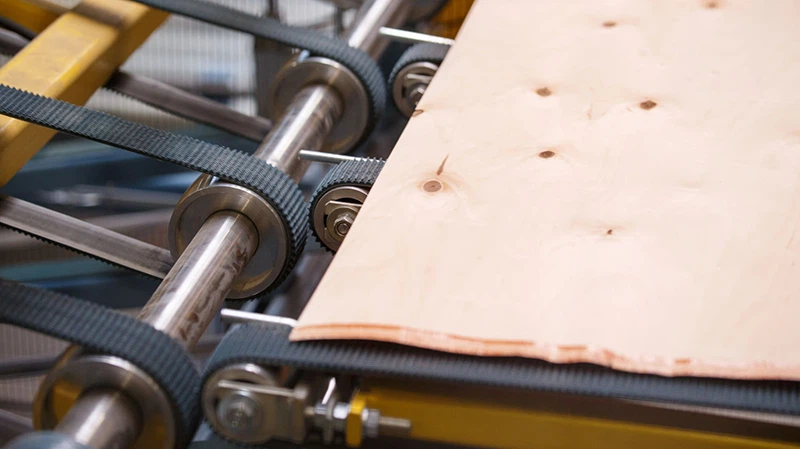
Plywood is not suitable for engraving on the surface, so the surface decoration effect looks relatively simple. If engraving is forced on the surface of the plywood, the surface will be destroyed, or the plywood will have burrs.
Disadvantage 2: Health Impacts of Plywood.
Plywood is low in environmental protection and will contains some harmful substances. Because plywood is inseparable from resin glue coating for gluing in the production process, and resin glue generally contains formaldehyde, so the environmental protection of plywood is relatively poor, and harmful substances such as formaldehyde will be released.
Disadvantage 3: Plywood is a bit expensive.
The surface treatment of multi-layer boards is relatively difficult, the requirements for flatness are higher, and various performances are excellent, so the cost is relatively higher.