


How To Pair Quartz Countertops With Custom Cabinets: A Complete Design Guide
Oct 15, 2026
Leave a message
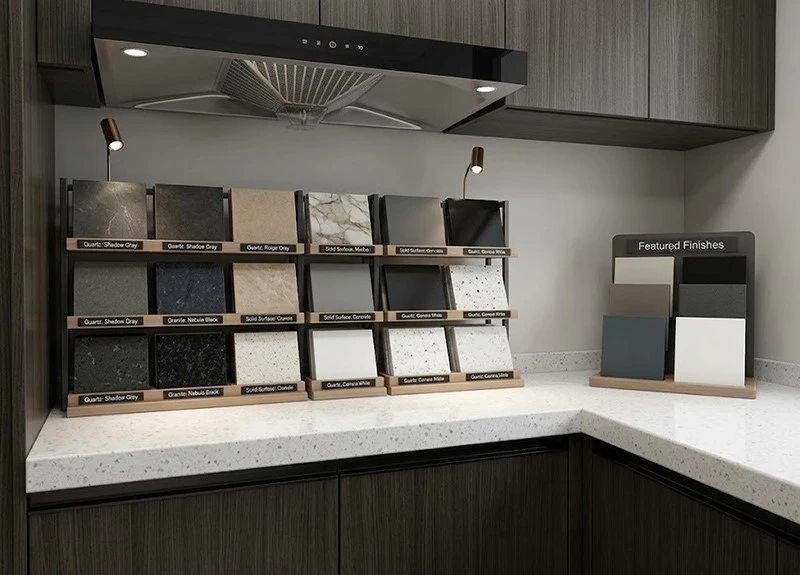
You have chosen quartz for your kitchen countertops. It is durable, low‑maintenance, and available in nearly every color and pattern imaginable. But here is the question that decides whether your kitchen looks thoughtfully designed or simply assembled: how do you pair the quartz slab with your cabinetry?
The wrong combination makes cabinets and countertops fight for attention. The right combination makes the whole kitchen feel intentional, balanced, and lasting. As a custom cabinet factory, we see this decision on every project. Here is the framework we use.
Why Quartz Is the Right Choice
Before talking about pairing, it helps to understand what makes quartz such a flexible partner for cabinets. Quartz is engineered from roughly 90% ground natural stone bound with resin, which gives it properties natural stone cannot always offer.
- Non‑porous and stain‑resistant. Wine, coffee, and oil do not seep in the way they can on unsealed granite or marble. You never need to seal the surface.
- Consistent color and pattern. Every slab matches the sample you approved, with none of the dramatic surprises that natural stone can deliver between bundles.
- Scratch‑ and chip‑resistant in daily use. It stands up to knives, pots, and dropped utensils far better than solid surface and softer marbles.
- Broad design range. From plain whites and deep charcoals to slabs printed with dramatic, flowing veins that mimic Carrara or Calacatta marble, quartz can look minimal, luxurious, or rustic without the maintenance of the real stone.
That range is exactly why pairing matters so much: quartz can blend in or stand out, and you need to decide which role it should play.
Match the Undertone, Not Just the Color
The most common mistake is matching the surface colors by eye on a showroom wall. Two whites that look similar can pull the whole kitchen in opposite directions once installed.
Look past the obvious color and find the undertone. Quartz slabs and cabinet finishes both lean warm or cool:
- Warm undertones carry yellow, beige, cream, or taupe. They feel cozy, traditional, and inviting - think oak cabinets with a cream quartz that has a faint brown movement.
- Cool undertones carry gray, blue, or green. They feel modern, clean, and crisp - think gray shaker cabinets with a pure white quartz that has a soft gray vein.
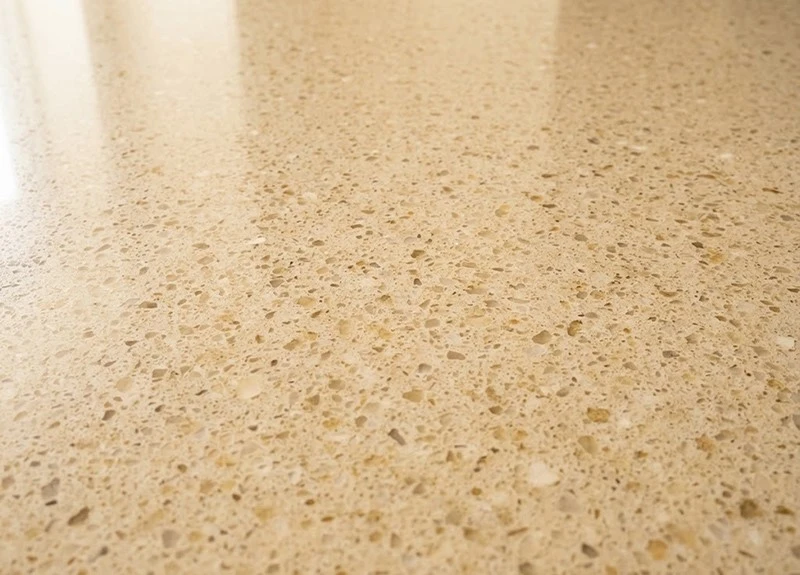
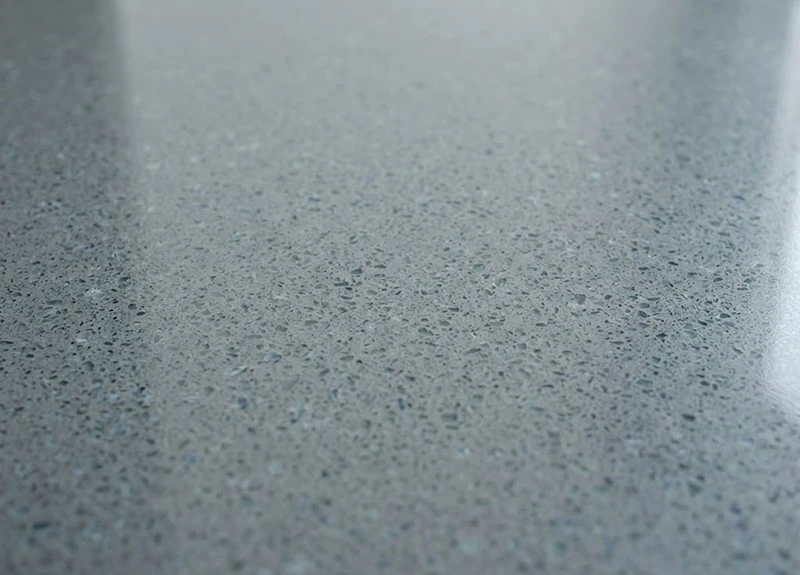
The rule of thumb is simple: warm with warm, cool with cool. A warm, yellowish quartz paired with a cool, gray‑toned white cabinet will make each surface look off, even though neither color is wrong on its own.
If you want contrast rather than harmony, do it deliberately - for example, deep navy cabinets with a warm white quartz creates a rich, designed contrast, not an accidental clash.
Choose the Pattern and Veining Intentionally
Quartz comes in three visual families, and each one changes how loud the countertop feels.
Solid or finely speckled quartz reads as quiet and clean. It works well when your cabinets already have a strong color, a textured finish, or detailed millwork. The countertop becomes a calm horizontal surface that lets the cabinetry lead.
Mottled or lightly patterned quartz adds gentle movement without drama. This is the safest middle ground for most kitchens - it hides small marks, pairs with almost any cabinet color, and keeps the room feeling calm.
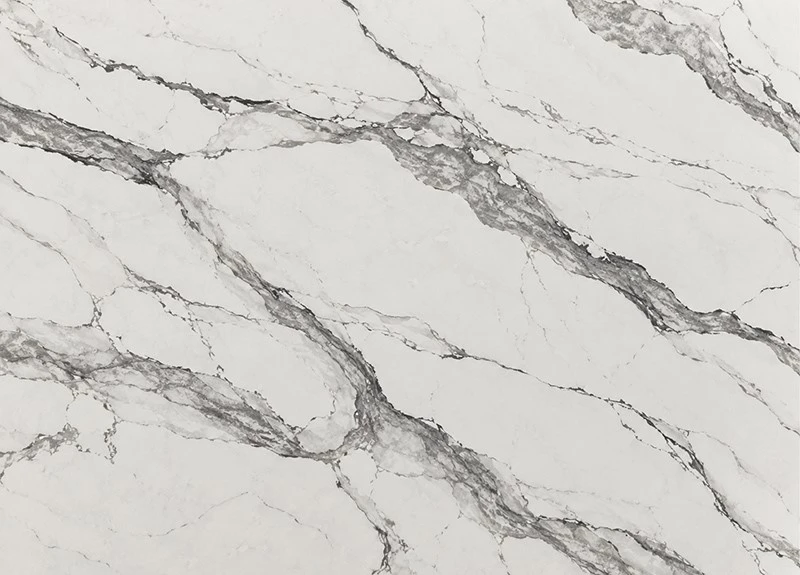
Dramatic, vein‑driven quartz - slabs with wide, flowing veins that look like marble - is a statement material. The veining draws the eye immediately, so the cabinets around it should stay simple: flat‑panel doors in a neutral color, minimal hardware, no busy backsplash. If you pair a bold‑veined quartz with a detailed cabinet door and a patterned backsplash, the kitchen will feel overcrowded.
Also pay attention to the scale and direction of the veining. Wide, sweeping veins suit large, open kitchens with plenty of wall space. Fine, tight specks work better in small kitchens, where a big pattern can feel busy.

finely speckled
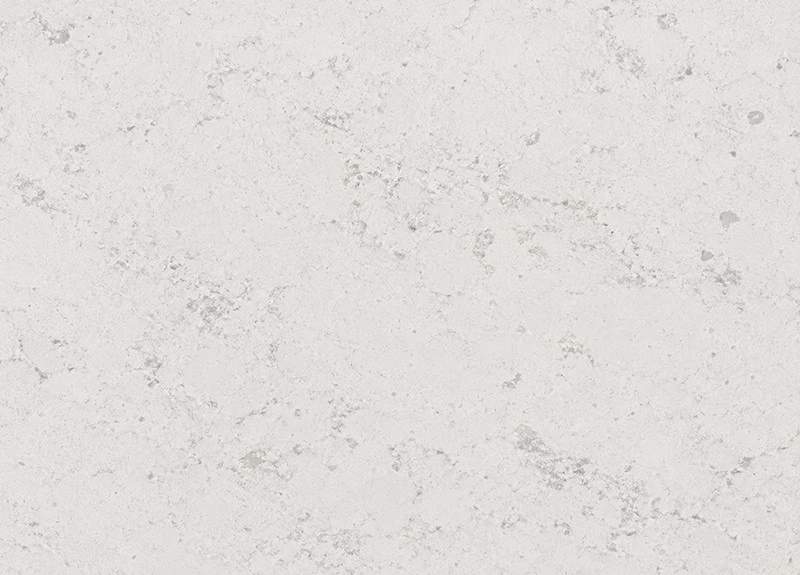
lightly patterned
planning cepteur
Decide the Hero Before You Order
Every kitchen needs one clear focal point. Trying to make both the cabinets and the countertop spectacular is the fastest way to a design that feels noisy.
If your cabinets are the hero: choose a bold cabinet color (deep green, terracotta, navy, a rich wood grain) and pair it with a quiet quartz - a plain white, warm gray, or soft beige. The countertop supports, not competes.
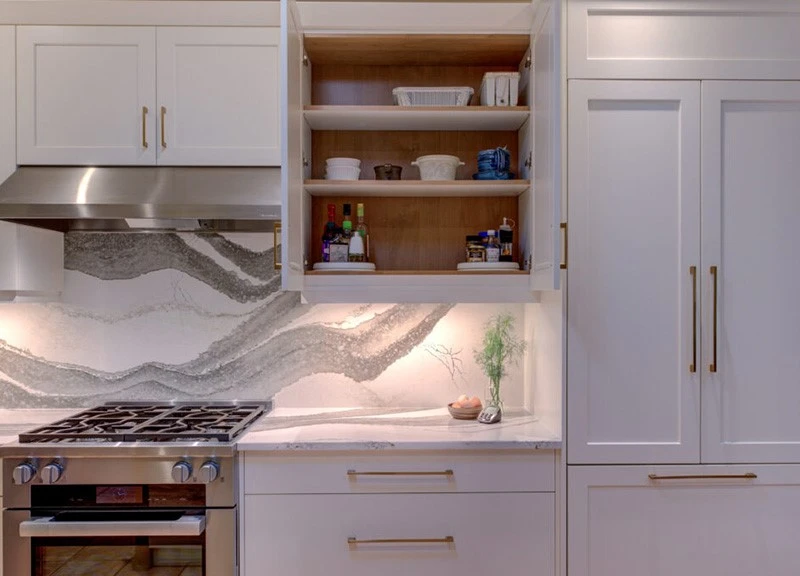
If your countertop is the hero: choose a dramatic quartz with bold veining or an unusual color (concrete‑look, deep black, a subtle jewel tone) and keep the cabinets neutral and simple - white shaker, warm oak flat panel, or a soft gray slab. Let the slab be the artwork.
The balanced kitchen splits the role: cabinets in a soft, timeless color and quartz with gentle movement. This is the most popular approach because it ages well and suits nearly any home style.
Coordinate the Backsplash and Hardware
The countertop does not sit alone. It touches two other elements that pull the whole design together.
The backsplash sits directly between the countertop and the upper cabinets. You have three workable strategies:
- Match the quartz.Use the same quartz for the backsplash for a seamless, uninterrupted surface. This is the most modern and easiest choice.
- Bridge the two. Pick a backsplash tile color that sits between the cabinet color and the quartz color, so the transition feels natural.
- Contrast carefully. A subway tile in a complementary tone can add character, but avoid introducing a third pattern that competes with both the cabinets and the quartz.
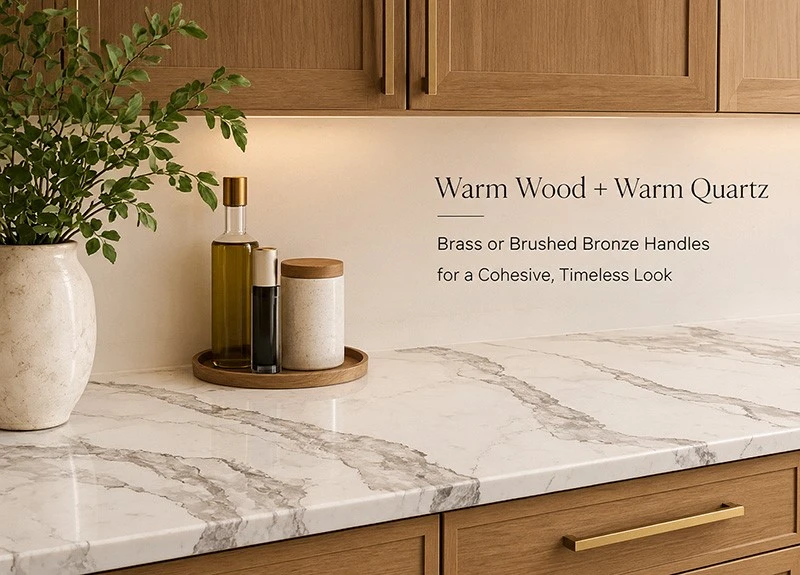
Hardware is the punctuation mark. The metal finish - brushed nickel, matte black, brass, chrome - should echo something else in the room. If you have warm wood cabinets and a warm quartz, brass or brushed bronze handles will tie them together. If you have cool gray cabinets and a cool white quartz, matte black or brushed nickel keeps the look clean. Keep the hardware style consistent with the cabinet profile: slim bar pulls for flat‑panel modern doors, cup or bin pulls for farmhouse shaker.
| Kitchen Style | Cabinets | Quartz Pick | Hardware & Backsplash |
| Modern Contemporary | Flat‑panel / handle‑less | Solid white, light gray, charcoal | Matte black/brushed nickel; matching quartz backsplash |
| Classic Shaker | Painted shaker | Warm white / cream, soft light veins | Brass / oil‑rubbed bronze; simple subway tile |
| Farmhouse Rustic | Oak / off‑white shaker | Warm‑toned, subtle grey movement | Cup pulls; neutral matte tile |
| Japandi Minimalist | Simple wood flat‑panel | Matte beige / light‑grey solid quartz | Slim muted metal; plain minimal backsplash |
| Luxury Marble‑Look | Neutral white / grey | Bold Calacatta heavy‑veined quartz | Thin brass pulls; quartz‑matched backsplash |
Check the Color Under Your Own Lighting
This is the step clients most often skip, and it causes the most regret. Quartz samples look different under showroom lights, under your kitchen's daylight, and under warm LED under‑cabinet lighting.
Before you confirm the order:
- Take the quartz sample home and look at it morning, noon, and evening. Natural light shifts the color throughout the day.
- Hold the sample against your cabinet door sample, not a white wall. The two surfaces will sit next to each other on the job.
- View it under the same temperature of bulb you plan to install. Warm 2700K bulbs will make a cool white quartz look cream; bright 5000K bulbs will make a warm quartz look dull.
- If possible, view the slab - not just the small sample - because the veining pattern can vary across a full surface.
Build the Whole Kitchen Together
The best quartz‑and‑cabinet pairings are not chosen as two separate decisions. They are designed as one system: cabinets, countertop, backsplash, hardware, and lighting all working toward the same look.
At REBON, we manufacture custom cabinets and coordinate every element of your kitchen - door style, finish, hardware, and the countertop recommendation that makes the whole design click. Whether you want a quiet, timeless kitchen or a dramatic marble‑look centerpiece, we build it to your measurements and your style.